


TL;DR
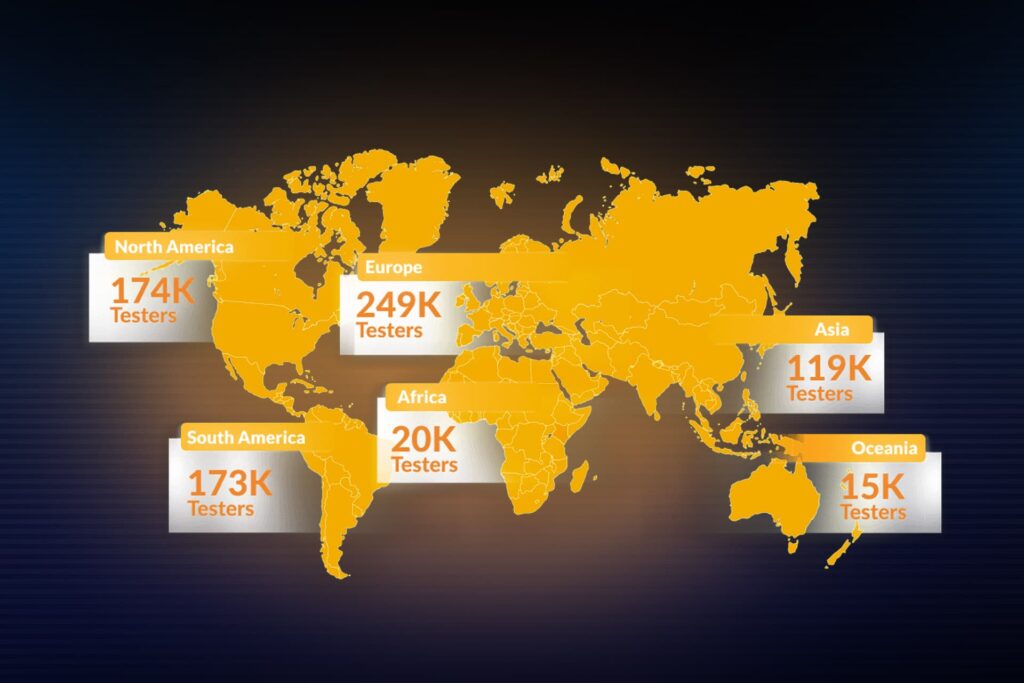
Playtester.net turns small, focused playtests into structured, scalable tests with decision-ready reporting. Tap 750,000+ opt-in testers, target precise cohorts by favorite genre, most played games, and more. Then feed results into Partnier’s broader pipeline for creators, press, events, and go-to-market.
Have questions? Book a chat with our account management team.
Playtester.net: Scalable Targeted Playtesting
Every confident launch starts the same way: with real players, real data, and a repeatable way to learn. Playtester.net is Partnier’s organic playtesting solution, built to take you from early gut-checks to large, targeted cohorts with clean, comparable feedback. Whether you need 100 curated testers on a prototype or thousands of players to pressure-test servers, Playtester.net gives you scale and signal without the chaos of ad-hoc notes and scattered spreadsheets.
Just as importantly, Playtester.net sits inside the wider Partnier ecosystem. Findings flow forward to creator campaigns on Keymailer, press outreach via Game.Press, owned landing pages and attribution on Game.Page, and synchronized event support. One workflow, consistent reporting, fewer surprises.
The Problem
Most teams begin sensibly: a handful of players, a quick Discord call, a few keys shared around. That’s fine for sniff tests. But it doesn’t scale. Three problems show up fast:
- Messy inputs. Feedback arrives as unstructured chat logs, screenshots, and anecdotes. Signal is buried, and nothing’s comparable build-to-build.
- Cohort drift. The definition of “who tested what” gets fuzzy. You can’t reliably recreate a segment, track longitudinal changes, or separate first-time experience from veteran bias.
- Decision bottlenecks. Without standardized instruments and clean exports, you can’t persuade stakeholders, support greenlights, or prove to partners that issues are fixed.
These problems compound near milestones. With marketing dates approaching and platform requirements looming, “we think it’s better” is not enough. You need the right players, the right questions, and a clear line from evidence to decision.
The Playtester.net Solution
Playtester.net replaces one-off testing with a system:
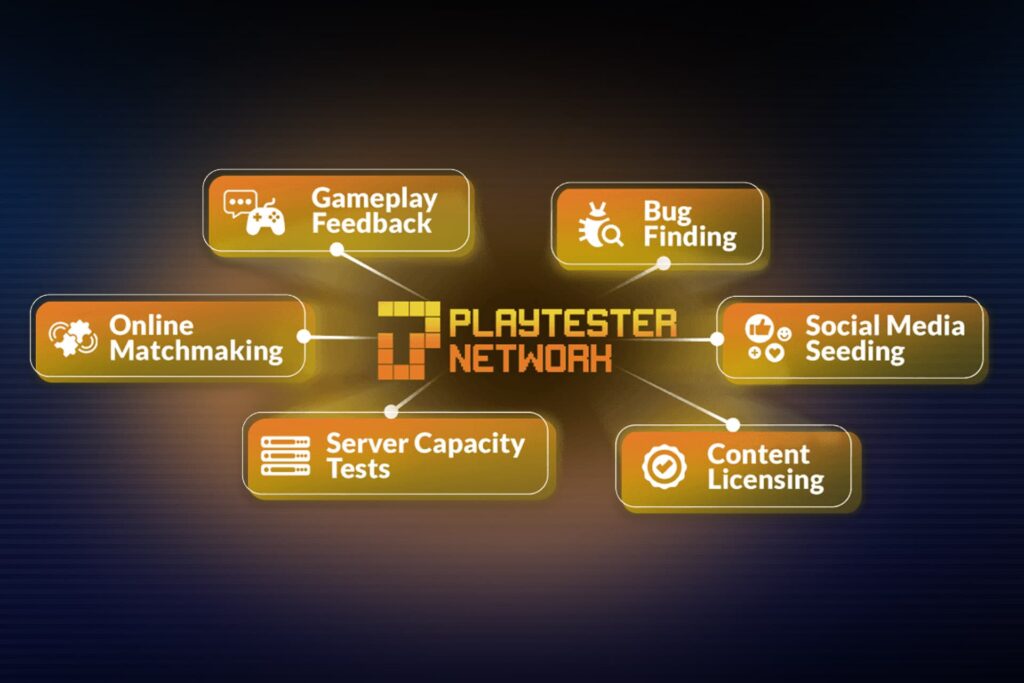
- Scale + signal. Access a network of 750,000+ volunteer playtesters who sign up because they care about playing and shaping games.
- Precision targeting. Segment by favorite genre, most played games, region, platform, device, and more, so test cohorts match your audience.
- Structured instruments. The Playtester CRM includes battle-hardened playtest questionnaires, media uploads, embedded instructions, and clear task design, so every round yields comparable, decision-ready data.
- Managed execution (Boosts). When you want people and processes as well as software, Playtest Boosts bundle recruitment, cohort management, and delivery.
- Technical scenarios. Server Seeding coordinates thousands of players at specific times to validate stability, matchmaking, and launch-day traffic.
- Flexible incentives. Keep motivation authentic with game-related rewards (copies, items, access). Cash is available when it makes sense.
- Clean outputs. Structured summaries and exports available in a variety of formats, such as CSV or JSON, make it simple to compare builds, diagnose regressions, and present to leadership or investors.
Why It Matters
Fewer surprises at launch. Structured playtesting finds sharp edges before creators, influencers, press, and players do. You prevent negative reviews, refunds, and avoidable churn.
Comparable progress, not anecdotes. Consistent instruments turn “feels better” into trend lines: task completion, time-to-first-fail, perceived difficulty, UX friction, stability, and sentiment.
Stronger business cases. Real player data supports greenlights, platform submissions, co-marketing asks, and funding conversations. When a milestone is at risk, evidence accelerates good decisions.
Faster iteration loops. Standardized forms, tagged cohorts, and repeatable runs compress cycles. Your designers get decision-ready reports instead of detective work. Seamless hand-off to go-to-market. Once features are proven, insights inform creator briefs on Keymailer, targeted press notes on Game.Press, and event beats, keeping your story aligned with what players actually enjoyed.
How It Works
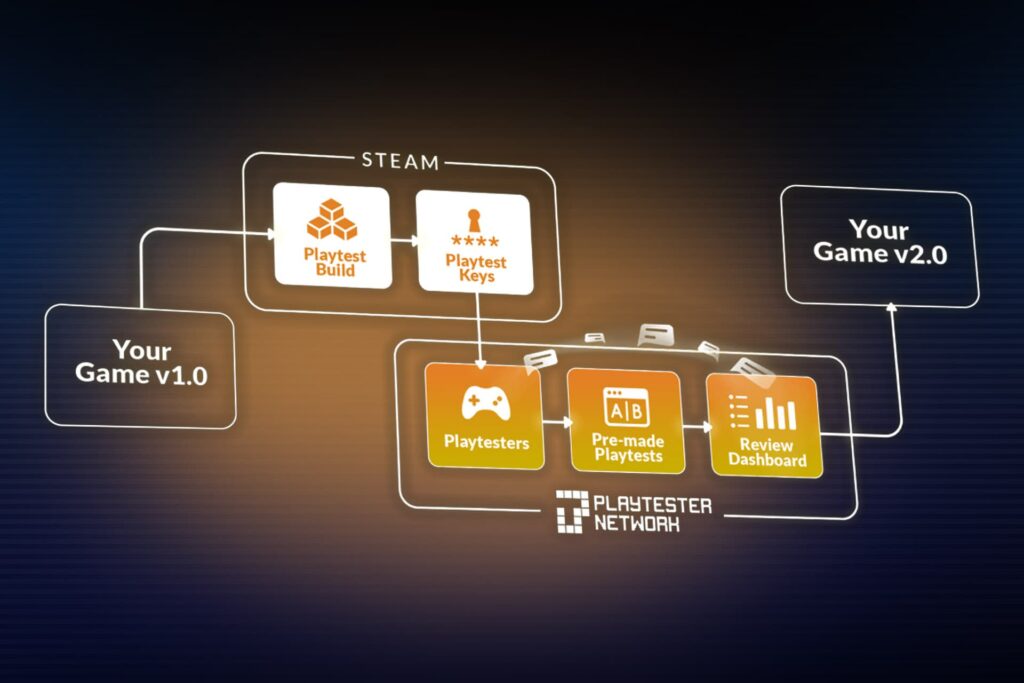
You can use Playtester.net à la carte, or chain options together as your project evolves. Here’s the practical path we see most often.
1) Scope & instrumentation
We start by clarifying goals (e.g., onboarding success, perceived difficulty, retention drivers) and defining questions that produce actionable answers.
2) Cohort design
Next, we build cohorts that mirror your audience: subgenres, regions, platforms, device classes, playtime bands, or “franchise-adjacent” players who will judge you against specific expectations. Cohorts can be one-off or longitudinal (the same players across multiple builds).
3) Recruitment & scheduling
For Playtest Boosts, we handle recruitment, communications, NDAs, timing, and incentives. For Server Seeding, we coordinate thousands of arrivals at set windows to test matchmaking, concurrency, and load-related UX (queueing, lobby churn, reconnect flows).
4) Run & monitor
As playtests run, we track participation, completion rates, and anomaly flags. If a build requires patches or hotfixes, we can phase cohorts so your team sees clean before/after comparisons.
5) Reporting & export
You receive a decision-ready summary with highlights and representative quotes/clips. Available in a variety of standard formats.
6) Iterate or move forward
Use findings to refine onboarding, rebalance encounters, or fix stability issues. When you reach proof points, we can pass learnings forward in things like influencer and press briefs or your guides and tutorials.
Playtesting Options: Quick Guide
1) Playtest Boosts (Core Option)
What: Recruitment + Playtester CRM + structured feedback.
When: You want 100–500 organic volunteer testers and results delivered on time without manual effort.
Why it’s popular: Fastest path to meaningful insights with minimal lift from your team.
2) Playtester CRM (Standalone)
What: A platform for managing testers, forms, tasks, and feedback yourself.
When: You already have testers (or plan to recruit your own) and need ongoing cohorts across multiple builds.
How it relates: The CRM is included in every Boost, and can be licensed separately for long-term control.
3) Server Seeding (Custom)
What: Large-scale recruitment (thousands of players) at scheduled times to fill servers.
When: You’re testing stability, matchmaking, concurrency, or launch-day traffic. Feedback is optional; technical validation comes first.
How it relates: Separate from Boosts; focused on infrastructure and multiplayer “feel” under load.
4) Player Recruitment Campaigns (Custom)
What: Performance-based outreach to bring players into a live/F2P title.
When: You need ongoing users for KPIs, funding requirements, or community growth.
How it relates: Similar recruitment mechanics to playtesting, but outcomes measured as player acquisition, not feedback.
5) Incentive Strategy Support
What: Guidance on rewards (copies, items, credits, early access; cash if required).
When: You want to balance cost with motivation and keep participation authentic.
How it relates: Applied across Boosts, CRM use, and recruitment to attract the right testers for the right reasons.
6) Influencer Playtests (via Keymailer)
What: Testing plus early creator visibility.
When: You want creator feedback and reach alongside testing or as a pre-launch beat.
How it relates: Not part of core playtesting; handled through Keymailer and designed to complement, not replace, organic player feedback.

FAQs
How many testers do I need?
Early UX checks often start at 100–200. Feature validation runs 200–500. Balance/stability questions and riskier features may require 1,000+. We’ll recommend a size based on goals and confidence thresholds.
Are testers paid?
No. By default, playtesters receive game related incentives (copies, items, exclusive access) to keep motivation authentic. Cash options are available where appropriate (e.g., specialist hard-to-reach cohorts or stringent scheduling).
Can you match my target audience?
Yes. We filter by favorite genre, most played games, region, platform/device, and more prioritizing players who genuinely play similar titles.
Can we run longitudinal tests with the same people?
Absolutely. Tag cohorts to follow the same testers across multiple builds and isolate first-time vs. returning player experiences.
What about NDAs and security?
We can gate access via NDAs, embargoes, and manage entitlements. Talk to us about your security posture and requirements.
How fast can we start?
Boosts are designed for speed. If you have a clear brief and a testable build, we can scope instruments, recruit, and launch a round within 48 hours.
We already have a community. Can we use them?
Yes. The Playtester CRM standalone to manage your own cohorts or combine them with our network to fill gaps.
How does Server Seeding differ from a normal playtest?
Seeding prioritizes concurrency and flow (queues, reconnects, matchmaking quality) over qualitative feedback. It’s the right tool for infrastructure readiness.
See It in Action
Ready to de-risk your next milestone and build real launch confidence?
Book a short 1:1 with Account Management and we’ll map the right Playtester.net plan.
About Partnier
Partnier unifies community, influencers, press, events, and advertising in a single platform. With verified influencer and press networks, live coverage monitoring, anti-fraud, and optional managed support, we help teams from solo devs to AAA launch faster, learn faster, and grow audiences with less friction, across Next Fest and every beat that follows.